
ADHD + Screens = A Perfect Storm
How screens amplify the executive functioning challenges ADHD kids already face.


If there’s one thing I’ve learned after years of talking to parents about screens, it’s this: the “screens are fine in moderation” message is harmful for any developing brain—but it’s even more damaging for kids who are already neurologically vulnerable.
Last week, we talked about autism and the myth that neurodivergent kids somehow need more screen time, or that screens are neutral (or even beneficial) tools for differently wired brains. This week, we’re focusing on ADHD, and I’m sharing a guest post from Liz Breen, ScreenStrong Ambassador and mom of 2 boys who understands the challenges of raising a child with ADHD and the benefits that come from keeping toxic screens out of the home.
What I hope you’ll take away from this is that ADHD isn’t just about attention. It’s about executive functioning: self-regulation, motivation, impulse control, and the ability to tolerate boredom. Screens don’t build those skills. They often undermine them.
With that, here’s Liz:
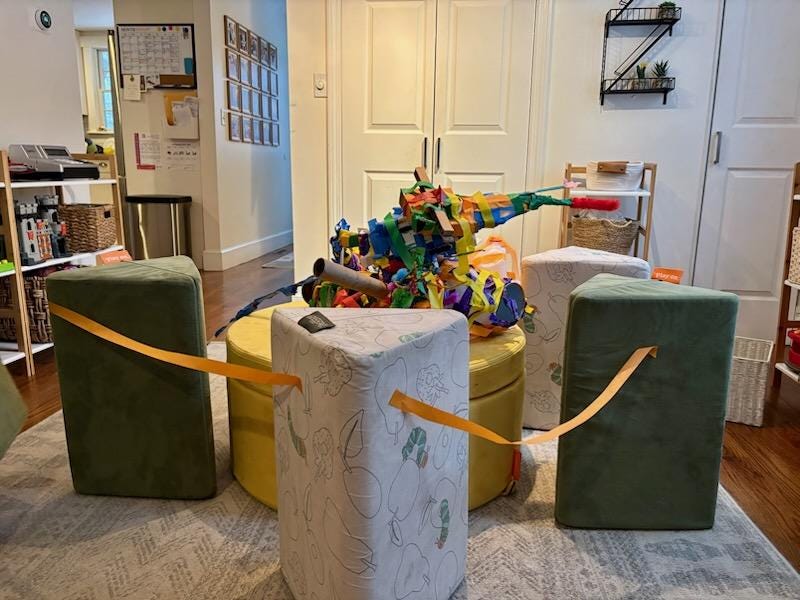
My son is brilliant, one of the most creative souls you’ll ever meet. Where others see trash, he literally sees treasure, often hauling life-sized sculptures off the bus after elementary school built entirely from tape, popsicle sticks, and whatever the school recycling bin had to offer. He knows nearly every plant and creature in our backyard by name and proudly states he wants to be an explorer when he grows up. He is also sensitive, sometimes achingly so. I still can’t sing “On Top of Spaghetti” within earshot because he can’t bear thinking of that poor meatball, lost and “probably afraid”.
He also has struggles, particularly in school. When he feels misunderstood, he can lash out. When faced with a task that doesn’t play to his strengths, he can shut down. When the weather limits his access to the outdoors, he can have trouble containing his energy. His official school IEP lists the cause as various executive functioning delays, but most people know it by another name: ADHD.
“Do you really think he has ADHD?” I asked a psychologist in the midst of school evaluations, open to anything, but also not wanting to label unnecessarily.
“I do,” she said. “And I think his symptoms would be much worse had he been given an iPad.”
Her words felt like both a validation and a wake-up call. My husband and I have raised our kids ScreenStrong from birth, meaning we have never owned a tablet, never let them watch videos or play games on our phone, and only allow some shared TV time on the weekends. Learning about my son’s neurodiversity hasn’t made me question that choice. It’s made me fiercely protective of it.
Screens Exploit ADHD’s Weakest Points
When some people think of ADHD, they think of kids who are bouncing off the walls while wearing a backpack full of crumpled paper and half-eaten apples, and that’s not the full story (though I have found more than a few half-eaten apples in my son’s backpack).
ADHD is an executive functioning delay, and while executive functioning is what helps kids keep backpacks organized, it’s far more involved than that. As Mike McCleod, co-host of the ADHD Parenting Podcast and author of the new book The Executive Function Playbook: Building Independence in Kids with ADHD, explains, executive functioning rests on three pillars: self-regulation, self-motivation, and self-evaluation.
Self-regulation: How well can your child control their emotions, particularly difficult ones like anger and frustration?
Self-motivation: How easily can your child motivate themselves to do difficult or non-preferred tasks, like chores or homework?
Self-evaluation: How well can your child accurately reflect on their own behavior or performance and understand their role in an outcome?
Strong executive functioning is one of the biggest predictors of success in adult life—more than grades, SAT scores, or college choice. For neurotypical kids, these skills, governed by the prefrontal cortex, aren’t fully developed until around age 25. But kids with ADHD face a significant delay: their executive functioning won’t fully mature until closer to 30, and throughout childhood, they’ll lag several years behind peers in emotional regulation, impulse control, and social skills.
How do kids with ADHD develop these skills? The same way as everyone else, Mike says: through unstructured play and varied experiences. Screens—particularly tablets, social media, and video games—rob children of both, while simultaneously making executive functioning challenges worse.
Consider what Kids’ Brains & Screens teaches about how screens impact the developing brain:
Constant task-switching. Every notification, every autoplay video, every recommended post trains the brain to jump from one thing to the next. For kids with ADHD who already struggle with attention regulation, screens don’t just distract, but reinforce the very neural pathways that make sustained focus difficult.
Instant gratification. Video games and social media are engineered to deliver what Mike often refers to as “a dopamine tsunami.” Kids with ADHD already have lower baseline dopamine levels, making them especially vulnerable to these reward systems. The more their brains learn to expect immediate payoffs, the harder it becomes to motivate themselves for tasks that require any delayed gratification, which includes homework, chores, and even most real-life hobbies.
Predictable, narrow experiences. Screens offer the same controllable environment every time. There are no unexpected challenges, no uncomfortable social dynamics, and no need to adapt. For kids with ADHD who crave routine and predictability, this feels safe. But it also keeps them trapped in their comfort zone, robbing them of varied experiences and stunting necessary growth and progression.
Shallow social interactions. Online friendships and gaming communities don’t require the hard work of face-to-face relationships: reading body language, being empathetic to another point of view, managing conflict in real time, or practicing patience when someone doesn’t respond instantly. Kids with ADHD already lag behind peers in social skills. Screen-based relationships let them avoid the very practice they need most, leaving them even less equipped to navigate real friendships.
Passive consumption over active reflection. Screens keep kids in a perpetual state of reaction rather than reflection. There’s no pause button. The next video loads in three seconds, the next notification arrives, the game advances. For kids with ADHD who already struggle to slow down their racing thoughts and impulses, screens reinforce the very pattern they need to break.
In other words, screens don’t just fail to build executive functioning; they actively undermine it. For kids with ADHD, this isn’t just a missed opportunity for growth. It’s pouring gasoline on a fire.
What Kids With ADHD Need Most
Parents often turn to screens as a way to help their ADHD kids relax after the demands of the school day (and give themselves a chance to decompress in the process). But as Mike writes in The Executive Function Playbook, “I have never met a child with ADHD who did not get dysregulated in some way by screens.”
It’s not just what screens do to kids with ADHD, either. It’s what they replace: the unstructured play and varied experiences that actually build their lagging executive function skills. And without executive functioning skills, these kids cannot discover who they really are to reach their full potential.
“What makes me so passionate about this topic,” Mike writes, “is that screens do not allow kids to discover their talents. ADHD kids are capable of anything… However, when their entire childhood is spent in the virtual world, their talents and skills stay within and never see the daylight.”
And this is the vicious cycle. As Melanie Hempe at ScreenStrong always says, “Our brains crave low-effort, high-reward activities.” For kids with ADHD whose self-motivation is already compromised, this craving is even more intense. Screens deliver exactly what their struggling brains want most. And in doing so, it denies them what they actually need.
Kids with ADHD need what all our kids need to grow up healthy. They just need it even more desperately: time outdoors, unstructured play with peers, face-to-face socializing, physical challenge, and real-life hobbies. Even “moderate” screen use—an hour in the evenings, a Saturday afternoon—time steals hours from these precious activities. And the theft doesn’t end when the screen turns off. Kids replay game past scenarios, imagine future ones, and mentally check out of real-world moments because their minds are still tethered to the virtual world. “Moderate” use is where unhealthy screen habits are born.
What we’re talking about—removing toxic screens and getting kids reconnected with the real world— is simple, sure. But easy? Absolutely not. Screens are the easier choice, offering instant calm and instant quiet to a household that may be a bit louder and more chaotic by default. But they exact a price these kids can’t afford to pay.
Don’t Make a Hard Thing Harder
Removing toxic screens from your home won’t solve all your ADHD challenges. I would know. My home has never had them, and my son still has his struggles. But at least I know we are dealing with his baseline struggles, not the amplified version that comes when screens hijack an already vulnerable brain. The school still calls. The impulsive decisions still happen. There are hard days. But on those hard days, there’s real comfort in knowing we’re fighting the smallest version of this battle we can.
I realize not every family is starting from this position. For many families, screens are already deeply embedded in the home—perhaps even recommended at some point by a doctor or therapist—and the idea of removing them feels overwhelming, especially when you’re already managing ADHD challenges.
Throughout The Executive Function Playbook, Mike covers so many aspects of parenting a child with ADHD—morning routines, homework struggles, peer relationships—yet he chooses to make this one of the very last thoughts of the final chapter, which he titles “ADHD Hope”:
“I have worked with so many families who did the hard thing. They removed screens from the home, persevered through the behaviors, and created a new and beneficial structure at home. They watched as their kids became more regulated, slept better at night… became more social, spending hours after school outside riding bikes… and finding new interests and talents.
Every single one of them, and I mean it—every single one of them with 100% accuracy—saw positive progress from their child. In all my years working with families… not a single one has ever regretted it.” Something tells me you won’t, either.
Change Is Possible
I know for many families with kids with ADHD, the idea of taking screens away can feel like you’re removing the only thing that seems to motivate your child.
Luckily, the ScreenStrong Solution isn’t about creating a screen-free void. It’s about replacing unhealthy screen habits and rebuilding a daily rhythm that makes real life easier to choose than the screen.
That’s exactly why we created the 30-Day Reset, a step-by-step guide that walks you through how to remove toxic screens from your home and replace them with routines, structure, and simple alternatives that actually stick. It’s full of practical tips that are especially helpful for kids with ADHD, who have often been conditioned to crave low-effort, high-reward stimulation.
We show you how to flip that craving on its head by making healthy, non-screen options more obvious, more accessible, and more appealing, so you’re not just taking something away, you’re building something better in its place.
So many parents have started the 30-Day Reset since we’ve made it free on our Connect group that we are extending this offer for just a few more weeks. That means when you join our free Connect group, you get access to the full 30-Day Reset.
If you’ve been feeling stuck—knowing screens aren’t helping, but unsure how to unwind them without chaos—this is your next step. You don’t have to figure it out alone, and you don’t have to rely on willpower. The Reset gives you a clear plan, a supportive community, and the tools to create lasting change.
You’ve got this. And ScreenStrong always has your back.
ScreenStrong Resources
Melanie Hempe, RN, is the founder of ScreenStrong, a nonprofit organization, and the author of the Kids’ Brains and Screens Series for students and parents. She is dedicated to preventing and reversing childhood screen addictions by providing scientific evidence and community for families around the globe. Her educational material is filled with everything she wished she had known before her oldest child suffered from a screen addiction. ScreenStrong has created what every family needs—education and the community—to skip toxic screens through adolescence so teens can reach their full potential.
Visit KidsBrainsAndScreens.com to see all our KBS offerings—including our new Adventures of Super Brain for elementary schoolers—and head to ScreenStrong.org to learn more and join the community that is saving childhood.
Thank you so much for your article. This quote struck me: “'What makes me so passionate about this topic,' Mike writes, 'is that screens do not allow kids to discover their talents.'" I have a lot of ADHD-like traits and it took me a lot of my childhood and adolescence and even early adulthood to find myself and what I could do well. If addictive technologies had been around for me as a kid, and I was given access, I'm sure my life would have been much less fulfilling.
I also think that what is called "ADHD" throughout most of our human history has been adaptive... you were just the kid that pushed it a little, went a little further in your discovery, and kept an eye out for "distractions" that often were a predator which could hurt your family. We can still make ADHD, including its push for discovery and an awareness of surroundings--a strength if we keep kids away from addictive screens.
I appreciate how you focus on executive functioning rather than just “attention” when talking about ADHD. The connection between dopamine-driven design and delayed self-regulation makes a lot of sense, especially for kids already vulnerable in that area. It’s also powerful to frame screen removal not as punishment, but as protecting a developing brain.