
Does Screen Time Make Autism Worse? What Studies Show
As Dr. Victoria Dunkley summarizes, “Special brains, special risk.”

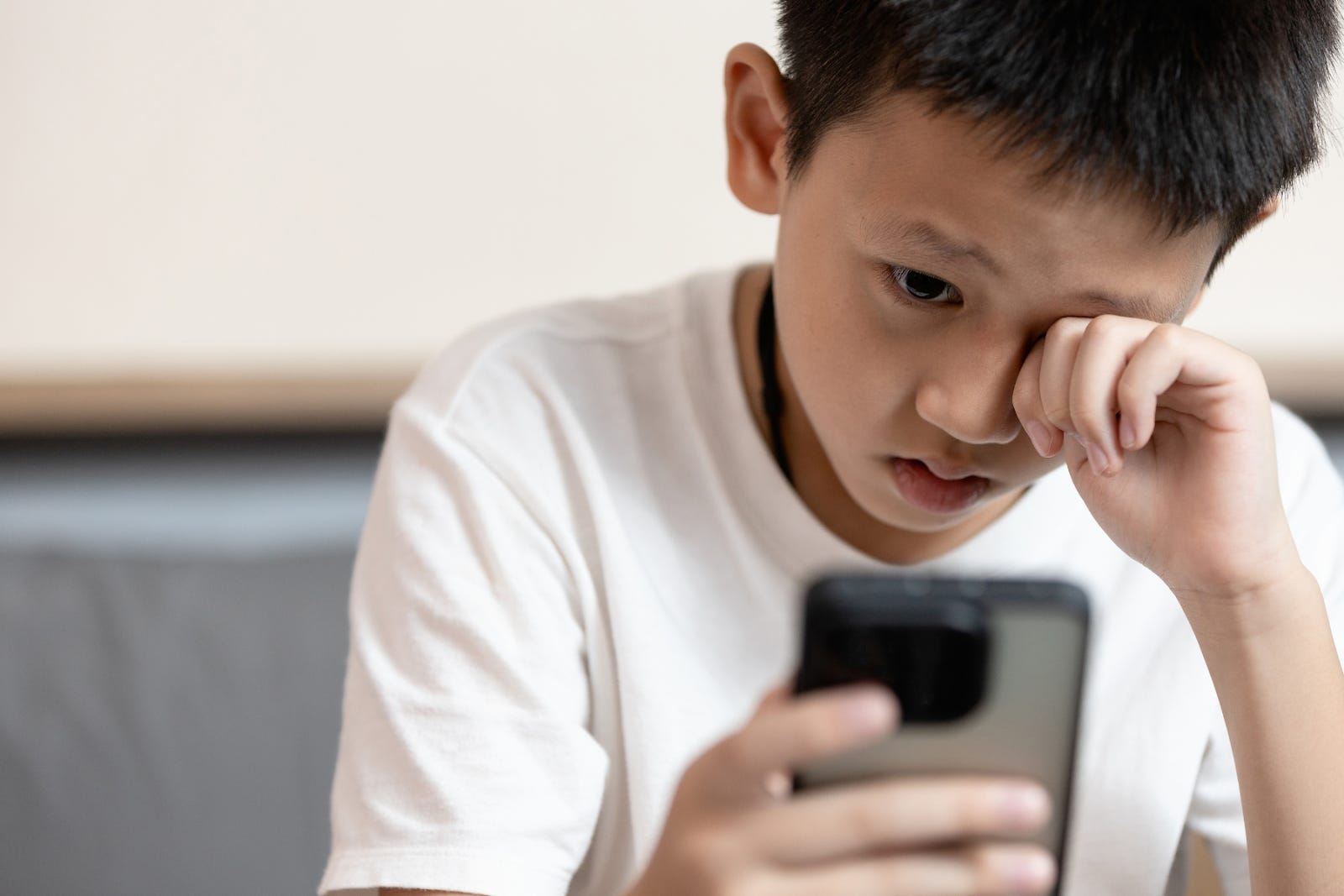
If you are subscribed to this Substack or familiar with the ScreenStrong Families podcast, you know that when it comes to the issue of screens, I am bold, outspoken, and unapologetic about protecting children’s developing brains from the documented harms of recreational screen time.
The #1 mission of the ScreenStrong organization is to dispel common screen myths with simple brain science.
Throughout this month, we’re tackling one of the most persistent—and perhaps most damaging—myths in the entire screen-time conversation: the belief that children with autism, ADHD, and other neurodevelopmental differences somehow need more screen time, or that screens are neutral (or even beneficial) tools for neurodivergent kids.
I approach this topic with extra sensitivity because I know the unique pressures parents of neurodivergent children face. You’re told that video games help your child connect socially and that screen-based rewards are “the only thing that works.” Well-meaning therapists and teachers may even hand you devices as behavior management tools, telling you that screens are not only the best way to help your child “regulate,” but that they also offer you a much-needed break.
Unfortunately, the science says only one of those things is true.
This week, I’m honored to share a guest post from Dr. Victoria Dunckley, adapted from an article originally published in Psychology Today. Dr. Dunckley has spent years working with families of children on the spectrum, and what she’s discovered should fundamentally change how we think about screens and differently-wired brains.
As she powerfully summarizes: “Special brains, special risk.” Here’s Dr. Dunkley:
Does screen time make ASD worse? Functional, physiological, and social factors that make special brains more vulnerable
A growing body of research links autism and autism-related symptoms with higher amounts of electronics’ use. In fact, children with autism spectrum disorders (ASD) are uniquely vulnerable to various brain-related impacts of screen time, yet tend to be high users. These electronic “side effects” include hyperarousal and dysregulation—what I call Electronic Screen Syndrome—as well as technology addiction, to video games, internet use, video viewing (think YouTube, TikTok, cartoons), use of smartphones and social media, and so on. Parents of children with ASD or special needs also tend to lean on devices more than with typcially developing kids, to control behavior, take a break, or get things done.
But why the concern? Because a brain with autism has inherent characteristics that screen time exacerbates. In truth, these impacts in occur in all of us, but children with autism will be both more prone to experiencing negative effects and less able to recover from them; their brains are more sensitive and less resilient.
As a framework for understanding these vulnerabilities, it’s helpful to know that screen time—particularly the interactive kind—acts like a stimulant, not unlike caffeine, amphetamines, or cocaine. Also important is children with autism are often sensitive to stimulants of all kinds, whether pharmaceutical or electronic. For example, children with autism and attention issues often can’t tolerate prescribed stimulants (eg Ritalin, Concerta, Adderall, Vyvanse), a standard treatment for ADD/ADHD. Stimulants tend to make children with autism irritable, weepy, over-focused, more obsessive-compulsive, and unable to sleep. Stimulants – including screen time – can also exacerbate tics, self-injurious behaviors, aggression, skin picking, and sensory issues.
Meanwhile, in families with special needs children, there exist additional social and emotional factors that contribute to technology overuse. First, families are often dealing with highly disruptive behaviors that are quieted—at least in the short term—by handing the child a device. Second, parents are told that “playing video games is ‘normal.’ It’s something your son can do with other kids.” Third, parents are encouraged to introduce technology early and often—especially if “he’s good at computers.” Fourth, in-home and school behavior therapists often use video games, iPads, phones or specific apps as reinforcers: “It’s the only thing that works with her!” And lastly, parents and clinicians are routinely encouraged to try unproven screen-based software claiming to reduce autistic behaviors or to improve social, communication or reading skills.
Needless to say, education in this arena is sorely needed.
11 Reasons Children with Autism are Extra Vulnerable to Screen Time Effects and Tech Addiction
1. Children with autism tend to have low melatonin and sleep disturbances [1] and screen time suppresses melatonin and disrupts sleep. [2] Aside from regulating sleep and the body clock, melatonin also helps modulate hormones and brain chemistry, balances the immune system, and keeps inflammation at bay.
2. Children with autism are prone to arousal regulation issues, manifesting in an exaggerated stress response, emotional dysregulation, or a tendency to be over or under-stimulated[3]; screen time increases acute and chronic stress, induces hyperarousal, causes emotional dysregulation, and produces overstimulation. [4]
3. Autism is associated with inflammation of the nervous system [5] and screen time may increase inflammation by a variety of mechanisms including increased stress hormones, suppressed melatonin, and non-restorative sleep. [6] Light-at-night from screens also suppresses REM sleep, a phase during which the brain “cleans house.” [7]
4. The autistic brain tends to be underconnected—less integrated and more compartmentalized [8]—and screen time hinders whole-brain integration and healthy development of the frontal lobe.[9] In fact, in tech addiction brain scan studies reveal reduced connectivity (via reduced white matter) and atrophy of gray matter in the frontal lobe. [10]
5. Children with autism have social and communication deficits, such as impaired eye contact, difficulty reading facial expressions and body language, low empathy, and impaired communication [11]; screen time hinders development of these exact same skills—even in children and teens who don’t have autism. [12] Screen time appears to directly compete with social rewards, including eye contact—a factor essential for brain development. [13] Lastly, screen viewing and even background TV has been shown to delay language acquisition. [14]
6. Children with autism are prone to anxiety [15]—including obsessive-compulsive traits, social anxiety—and screen time is associated with increased risk for OCD and social anxiety [16] while contributing to high arousal and poor coping skills. [17] Additionally, anxiety in autism has been linked to abnormalities in serotonin synthesis and amygdala activity [18] and both serotonin regulation and amygdala changes have been implicated in screen time. [19]
7. Children with autism frequently have sensory and motor integration issues [20] as well as tics; screen time has been linked to sensori-motor delays and worsening of sensory processing [21], and can precipitate or worsen vocal and motor tics due to dopamine release.
8. Individuals with autism are typically highly attracted to screen-based technology and are not only at increased risk for developing video game and other technology addictions, but are more likely to exhibit symptoms with smaller amounts of exposure. [22] Male teens and young adults with ASD are also at high risk for porn addiction, due to a combination of social deficits, isolation, and excessive computer time, and may develop romantic delusions or obsessions fueled by being accustomed to immediate gratification and a lack of practicing in the real world. At the same time, dopamine released by screen interaction reinforces these obsessive “loops.”
9. Children with autism tend to have a fragile attention system, poor executive functioning, and “reduced bandwidth” when processing information [23]; screen time likewise fractures attention, depletes mental reserves, and impairs executive functioning. [24]
10. Children with autism may be more sensitive to EMFs (electromagnetic fields) emitted from wireless communications (e.g. WiFi and cell phone frequencies) as well as from the electronic devices themselves. [25] At the cellular, molecular, and atomic level, the pathology seen in autism mirrors the effects demonstrated in research on the biological impacts of EMFs. Heightened sensitivity to EMFs may be due to (and may worsen) immune abnormalities and problems with barrier integrity in the gut and/or the brain.
11. Children with autism are at higher risk for psychiatric disorders of all kinds, including mood and anxiety disorders, ADHD, tics and psychosis. [26] Likewise, higher amounts of total screen time are associated with higher levels of psychiatric disturbances, including mood and anxiety disorders, ADHD, tics and psychosis. [27] Regarding psychosis, young people with ASD who engage in daily screen time may experience hallucinations, paranoia, dissociation, and loss of reality-testing. More often than not, however, these scary symptoms resolve or greatly diminish once devices are removed and don’t require antipsychotic medication.
An informed approach to address device use and optimize the ASD brain
In addition to the above, screen time replaces the very things we know to be critical to brain development: bonding, movement, eye contact, face-to-face verbal interactions, loving touch, exercise, free play, and exposure to nature and the outdoors. Reduced exposure to these factors negatively impact brain integration, IQ, and resilience in all children. This also means that parental use of devices, which diminishes eye contact, speech, and face to face communication, contributes to this risk.
In my own experience in working with children and adults with autism, screen time can precipitate regression (loss of language or of social or adaptive living skills), exacerbate repetitive behaviors, further restrict interests, and trigger aggressive and self-injurious behaviors. I’ve even seen regression occur when a communication device is introduced, often when the parents are told to encourage “play” on the device so the child can “get used to it.” The proliferation of the iPad and smartphones has produced more problems and setbacks in my practice than any other single factor.
As stressful and devastating as these experiences can be, so can methodical elimination of screens be exciting and inspiring. Being screen-free can enhance eye contact and language, increase flexibility in thinking and behavior, expand interests, improve emotional regulation and ability to stay on task, induce more restorative sleep, and reduce anxiety and meltdowns.
Because the idea of eliminating screens can seem overwhelming, I typically recommend parents do a four-week “electronic fast” (aka screen fast or tech fast) as an experiment so they can get a taste of what the intervention can do. Families track two to three problematic areas to provide objective evidence, and are encouraged to document behaviors (such as screen time tantrums and how the child plays). Even a few short weeks can produce improvements that can be significant enough for the family to decide to continue with screen elimination, in which case the benefits will continue to build on one another.
Will the child still have autism? Yes, but it’s practically guaranteed that they will feel, focus, sleep, behave, and function better. And intriguingly, anecdotal evidence suggests this simple intervention may be powerful enough to prevent, arrest or in some cases even reverse the autism process if caught early enough; pilot studies testing this intervention more formally are forthcoming. (Case studies illustrating these phenomena will be the subject of a future post.)
When parents really grasp the science of what happens in the brain when children interact with screen devices—and understand how these things specifically impact autism—they are much better able to restrict screens appropriately and are less swayed by social pressures. They “see” how screen time translates into certain symptoms in their child, they prioritize brain-health over being tech-savvy, and appreciate that every minute spent on a screen is a tradeoff.
Where to go next?
I hope you find Dr. Dunkley’s words as powerful as I did. Her book, Reset Your Child’s Brain, was a lifeline to me when my family was in the depths of our own screen addiction, and it was this book that guided the creation of the 30-Day Reset, ScreenStrong’s solution to toxic screen use and reclaiming your child’s brain health.
If you have a neurodivergent child—or a neurotypical child—and you’re wondering whether screens might be exacerbating their symptoms, or if you’re simply exhausted from the behavioral rollercoaster that comes with device use, the 30-Day Reset is your starting point. Just as Dr. Dunckley recommends a four-week “electronic fast” to give families objective evidence of what life can look like without screens, our 30-Day Reset provides the structure and support to make that happen. And for just a few more days, it’s also free when you join our no-cost ScreenStrong Connect group. By joining our Connect group, you’ll also gain something just as valuable as the reset: community.
Will your child still have autism, ADHD, or sensory processing challenges after 30 days? Of course. But as Dr. Dunckley promises, they will almost certainly feel, focus, sleep, behave, and function better. And you’ll finally have the clarity to see how screens were impacting your child’s unique brain—and the confidence to make decisions that truly serve their well-being.
Special brains deserve special protection. The 30-Day Reset gives you the roadmap to provide it.
You’ve got this, and ScreenStrong is always here to help.
ScreenStrong Resources
Podcast - “Twisted Truth; Autism and Screen Time with Dr. Victoria Dunkley”
Podcast - “Virtual Autism & Screens with Dr. Andrew Doan”
Melanie Hempe, RN, is the founder of ScreenStrong, a nonprofit organization, and the author of the Kids’ Brains and Screens Series for students and parents. She is dedicated to preventing and reversing childhood screen addictions by providing scientific evidence and community for families around the globe. Her educational material is filled with everything she wished she had known before her oldest child suffered from a screen addiction. ScreenStrong has created what every family needs—education and the community—to skip toxic screens through adolescence so teens can reach their full potential.
Visit here for family resource materials and here for our Phone-Free Schools Guide, and visit ScreenStrong.org to learn more and join the community that is saving childhood.
References
[1] J Melke et al., “Abnormal Melatonin Synthesis in Autism Spectrum Disorders,” Mol Psychiatry 13, no. 1 (May 15, 2007): 90–98.
[2] Shigekazu Higuchi et al., “Effects of Vdt Tasks with a Bright Display at Night on Melatonin, Core Temperature, Heart Rate, and Sleepiness,” Journal of Applied Physiology (Bethesda, Md.: 1985) 94, no. 5 (May 2003): 1773–76.
[3] Matthew S. Goodwin et al., “Cardiovascular Arousal in Individuals with Autism,” Focus on Autism and Other Developmental Disabilities 21, no. 2 (2006): 100–123; BA Corbett and D Simon, “Adolescence, Stress and Cortisol in Autism Spectrum Disorders.,” OA Autism 1, no. 1 (March 1, 2013): 1–6.
[4] Marjut Wallenius, “Salivary Cortisol in Relation to the Use of Information and Communication Technology (ICT) in School-Aged Children,” Psychology 1, no. 2 (2010): 88–95; Amy E. Mark and Ian Janssen, “Relationship between Screen Time and Metabolic Syndrome in Adolescents,” Journal of Public Health 30, no. 2 (June 1, 2008): 153–60; Gary S. Goldfield et al., “Video Game Playing Is Independently Associated with Blood Pressure and Lipids in Overweight and Obese Adolescents,” ed. Philippe Rouet, PLoS ONE 6, no. 11 (November 1, 2011): e26643.
[5] Theoharis C. Theoharides, Shahrzad Asadi, and Arti B. Patel, “Focal Brain Inflammation and Autism,” Journal of Neuroinflammation 10, no. 1 (2013): 46.
[6] Z. Ranjbaran et al., “The Relevance of Sleep Abnormalities to Chronic Inflammatory Conditions,” Inflammation Research: Official Journal of the European Histamine Research Society … [et Al.] 56, no. 2 (February 2007): 51–57.
[7] Christian Cajochen et al., “Evening Exposure to a Light-Emitting Diodes (Led)-Backlit Computer Screen Affects Circadian Physiology and Cognitive Performance,” Journal of Applied Physiology (Bethesda, Md.: 1985) 110, no. 5 (May 2011): 1432–38.
[8] Marcel Adam Just, Timothy A. Keller, and Rajesh K. Kana, “A Theory of Autism Based on Frontal-Posterior Underconnectivity,” Development and Brain Systems in Autism, 2013, 35–63.
[9] Cris Rowan, “Unplug—Don’t Drug: A Critical Look at the Influence of Technology on Child Behavior With an Alternative Way of Responding Other Than Evaluation and Drugging,” Ethical Human Psychology and Psychiatry 12, no. 1 (April 1, 2010): 60–68; Victoria Dunckley, “Gray Matters: Too Much Screen Time Damages the Brain,” Psychology Today, Mental Wealth, (February 27, 2014), http://www.psychologytoday.com/blog/mental-wealth/201402/gray-matters-t….
[10] Chuan-Bo Weng et al., “Gray Matter and White Matter Abnormalities in Online Game Addiction,” European Journal of Radiology 82, no. 8 (August 2013): 1308–12.
[11] R. Adolphs, L. Sears, and J. Piven, “Abnormal Processing of Social Information from Faces in Autism,” Journal of Cognitive Neuroscience 13, no. 2 (February 15, 2001): 232–40.
[12] Yalda T. Uhls et al., “Five Days at Outdoor Education Camp without Screens Improves Preteen Skills with Nonverbal Emotion Cues,” Computers in Human Behavior 39, no. 0 (October 2014): 387–92; Roy Pea et al., “Media Use, Face-to-Face Communication, Media Multitasking, and Social Well-Being among 8- to 12-Year-Old Girls,” Developmental Psychology 48, no. 2 (March 2012): 327–36.
[13] Karen Frankel Heffler and Leonard M. Oestreicher, “Causation Model of Autism: Audiovisual Brain Specialization in Infancy Competes with Social Brain Networks,” Medical Hypotheses 91 (June 2016): 114–22.
[14] Weerasak Chonchaiya and Chandhita Pruksananonda, “Television Viewing Associates with Delayed Language Development,” Acta Pædiatrica 97, no. 7 (2008): 977–82.
[15] Susan W. White et al., “Anxiety in Children and Adolescents with Autism Spectrum Disorders,” Clinical Psychology Review 29, no. 3 (April 2009): 216–29.
[16] Jee Hyun Ha et al., “Depression and Internet Addiction in Adolescents,” Psychopathology 40, no. 6 (2007): 424–30; Pea et al., “Media Use, Face-to-Face Communication, Media Multitasking, and Social Well-Being among 8- to 12-Year-Old Girls.”
[17] Christopher Mulligan, “The Toxic Relationship: Technology and Autism,” 2012, http://www.teenvideogameaddiction.com/The_toxicrelationshipautismandtec….
[18] D. C. Chugani et al., “Developmental Changes in Brain Serotonin Synthesis Capacity in Autistic and Nonautistic Children,” Annals of Neurology 45, no. 3 (March 1999): 287–95; Adolphs, Sears, and Piven, “Abnormal Processing of Social Information from Faces in Autism.”
[19] Jun Kohyama, “Neurochemical and Neuropharmacological Aspects of Circadian Disruptions: An Introduction to Asynchronization,” Current Neuropharmacology 9, no. 2 (2011): 330; Klaus Mathiak and René Weber, “Toward Brain Correlates of Natural Behavior: fMRI during Violent Video Games,” Human Brain Mapping 27, no. 12 (December 2006): 948–56.
[20] Geraldine Dawson and Renee Watling, “Interventions to Facilitate Auditory, Visual, and Motor Integration in Autism: A Review of the Evidence,” Journal of Autism and Developmental Disorders 30, no. 5 (2000): 415–421.
[21] Cris Rowan, “The Impact of Technology on Child Sensory and Motor Development,” 2010, http://www.sensoryprocessinginfo/CrisRowan.pdf.
[22] Micah O. Mazurek and Christopher R. Engelhardt, “Video Game Use and Problem Behaviors in Boys with Autism Spectrum Disorders,” Research in Autism Spectrum Disorders 7, no. 2 (February 2013): 316–24; Micah O Mazurek and Colleen Wenstrup, “Television, Video Game and Social Media Use Among Children with Asd and Typically Developing Siblings,” Journal of Autism and Developmental Disorders 43, no. 6 (June 2013): 1258–71.
[23] Just, Keller, and Kana, “A Theory of Autism Based on Frontal-Posterior Underconnectivity.”
[24] Edward L Swing et al., “Television and Video Game Exposure and the Development of Attention Problems,” Pediatrics 126, no. 2 (August 2010): 214–21; Robert M. Pressman et al., “Examining the Interface of Family and Personal Traits, Media, and Academic Imperatives Using the Learning Habit Study,” The American Journal of Family Therapy 42, no. 5 (October 20, 2014): 347–63; Angeline S Lillard and Jennifer Peterson, “The Immediate Impact of Different Types of Television on Young Children’s Executive Function,” Pediatrics 128, no. 4 (October 2011): 644–49.
[25] Martha R. Herbert and Cindy Sage, “Autism and EMF? Plausibility of a Pathophysiological Link – Part I,” Pathophysiology: The Official Journal of the International Society for Pathophysiology / ISP 20, no. 3 (June 2013): 191–209.
[26] Cecilia Belardinelli and Mahreen Raza, “Comorbid Behavioral Problems and Psychiatric Disorders in Autism Spectrum Disorders,” Journal of Childhood & Developmental Disorders 2, no. 2 (2016).
[27] Goran Mihajlović et al., “Excessive Internet Use and Depressive Disorders,” Psychiatria Danubina 20, no. 1 (March 2008): 6–15; Ju-Yu Yen et al., “The Comorbid Psychiatric Symptoms of Internet Addiction: Attention Deficit and Hyperactivity Disorder (ADHD), Depression, Social Phobia, and Hostility,” The Journal of Adolescent Health: Official Publication of the Society for Adolescent Medicine 41, no. 1 (July 2007): 93–98; J Lee, K Lee, and T Choi, “The Effects of Smartphone and Internet/Computer Addiction on Adolescent Psychopathology.” (166th Annual Meeting of the American Psychiatric Association, San Francisco, CA, 2013), http://www.psychcongress.com/article/smartphone-addiction-linked-increa…-.
While I fully agree with this post, as a speech language pathologist I would like to add that technology that is used for Augmentative and Alternative Communication (AAC) is not what this author is referring to. Technology that is a dedicated device used for communication only, often locked into the application with guided access or something similar, can be life changing for neurodiverse children with complex communication needs. This does not “count” as screen time and should be available throughout a child’s day as it is their voice.
Every autistic young man I know is a disgusting drooling porn-addicted freak. 3/3. Totally hopeless with girls. Leering, vulgar and bug-eyed when they talk to them.
One of the single worst of the many consequences of our negligence is what we let Pornhub do to autistic boys. The effect is horrific to me beyond my power to describe in words.
Disappointing the article wasn’t “bold and outspoken” enough to mention that issue.